
By Lindsey Munson, editor, Plastics Business
Sustainability is not a new concept in the plastics industry. It has been shaped into various meanings across multiple platforms depending on a company’s goals, vision and intended impact. At Hoffer Plastics, however, sustainability is more than a guiding principle – it is embedded in the company’s DNA. For more than 70 years, it has been a driving force behind Hoffer’s leadership approach, strategic direction and culture, as well as its product development and commitment to environmental responsibility.
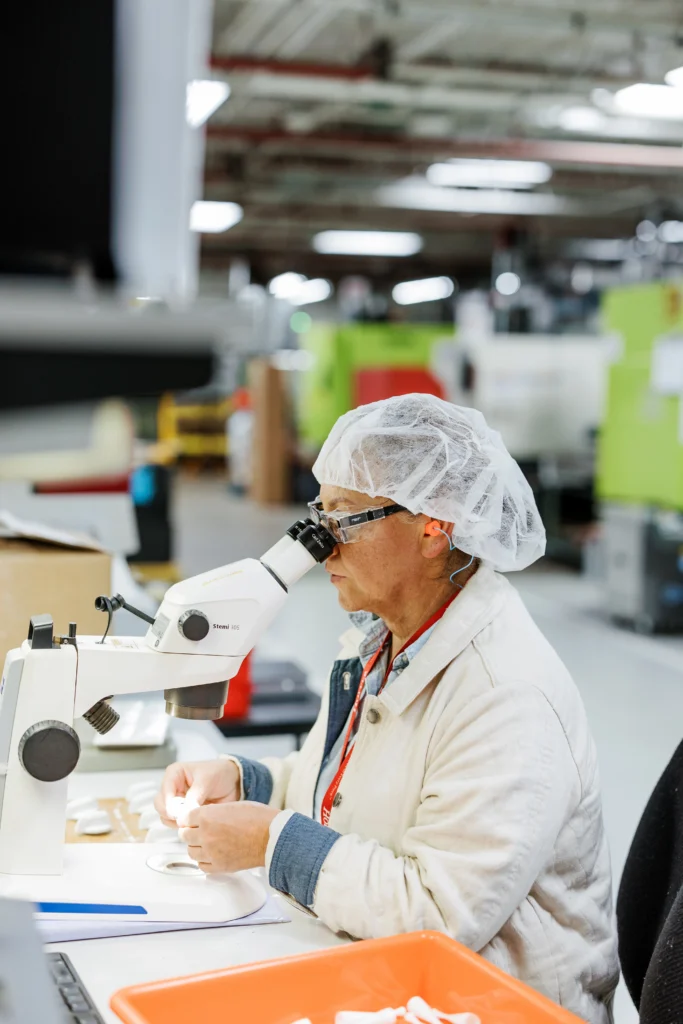
Located in South Elgin, Illinois, Hoffer Plastics is a family-owned custom injection molder with more than 350 employees, collectively producing over three billion parts annually. In December 2024, the company reached a new level in its sustainability efforts by hiring Hannah Mooberry as its environmental and sustainability specialist – turning its vision into long-term value. Plastics Business had the pleasure of working with Mooberry to learn about Hoffer’s sustainability strategy, its operational impact, implementation practices, measurable progress and the company’s outlook.
The Strategy
With an emphasis on “environmental stewardship” as part of Hoffer’s core business, creating this role reinforced the company’s commitment to reducing carbon footprints and positioned sustainability as a strategic priority. Looking beyond an aspirational objective per Mooberry, the environmental and sustainability specialist role was created to forge sustainability efforts with dedicated expertise and strategic focus. Mooberry said, “The role also reflects Hoffer’s broader commitment to supporting emerging talent while building internal capabilities around sustainability. I first connected with the company at a career fair, where I met Shari Nelson, director of human resources, and other members of the Hoffer team. I initially joined Hoffer Plastics as an intern focused on environmental and sustainability initiatives. As the scope and importance of that work grew, the company created my now full-time role to support and expand those efforts.”
As the environmental and sustainability specialist, Mooberry guides the company’s ongoing strategy through multiple initiatives, including:
- developing and standardizing a carbon tracking framework,
- implementing updated reuse and regrind resin programs,
- pursuing ISO 14001:2015 certification,
- reducing scrap going to landfills and
- enhancing product recyclability.
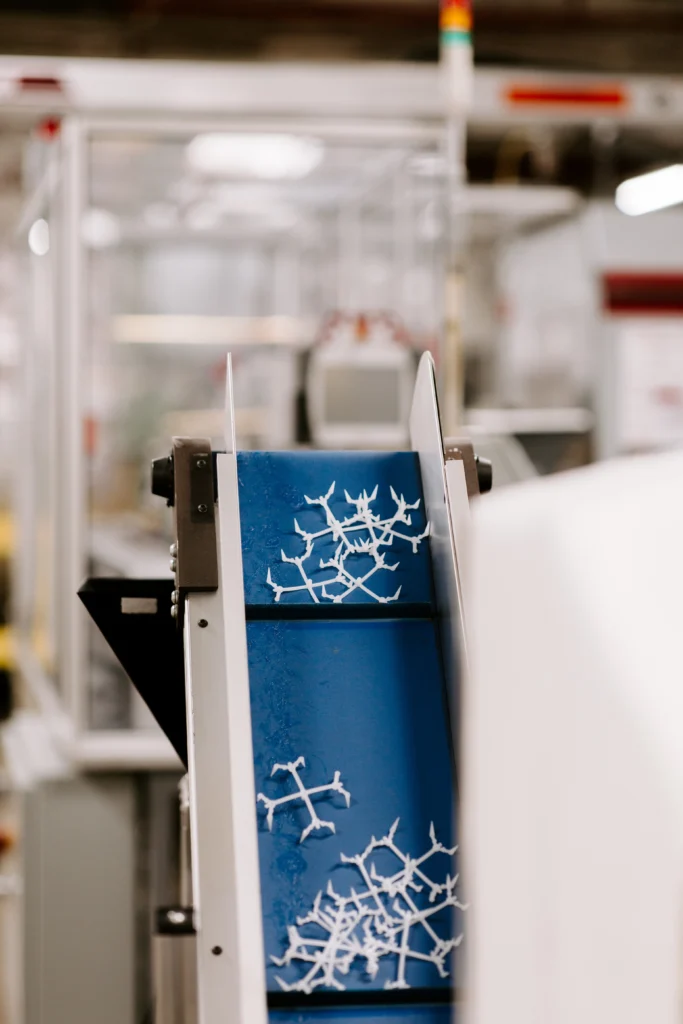
In developing this strategy, Hoffer created a foundation of total buy-in across the organization, with all departments playing a critical role in its environmental impact without compromising operational efficiency or product performance. To date, this commitment is shown across several key areas of the company:
- Engineering and Product Development: Designs focus on reducing material use and improving recyclability. Mooberry said, “For example, Hoffer is partnering with suppliers across the flexible packaging supply chain to create mono-material packaging designs that improve product recyclability while maintaining functional performance requirements.”
- Manufacturing Operations: “Sustainability is woven into day-to-day production,” said Mooberry, “through regrind systems, energy-efficient equipment, superior closed-loop water filtration, automation for efficiency and diversion of scrap from landfills.”
- Maintenance: Supports are in place for environmental management practices, including EPA reporting, building systems and environmental controls, coordinating recycling material flows, mitigating emissions and preventing leaks and spills.
- Supply Chain: Initiatives like carbon emissions and reusing materials demand collaboration with partners to understand both upstream and downstream environmental impacts completely.
- Customer Relations: “Sustainability initiatives are closely aligned with customer goals through collaborative product design and packaging innovation. Hoffer works with customers to develop solutions that reduce material use through lightweighting, incorporate post-consumer recycled materials, with up to 30% PCR in certain applications, particularly disposable packaging and support recycle-ready mono-material packaging structures, all while preserving product functionality, safety and performance,” said Mooberry.
Operational Discipline Equals Impact
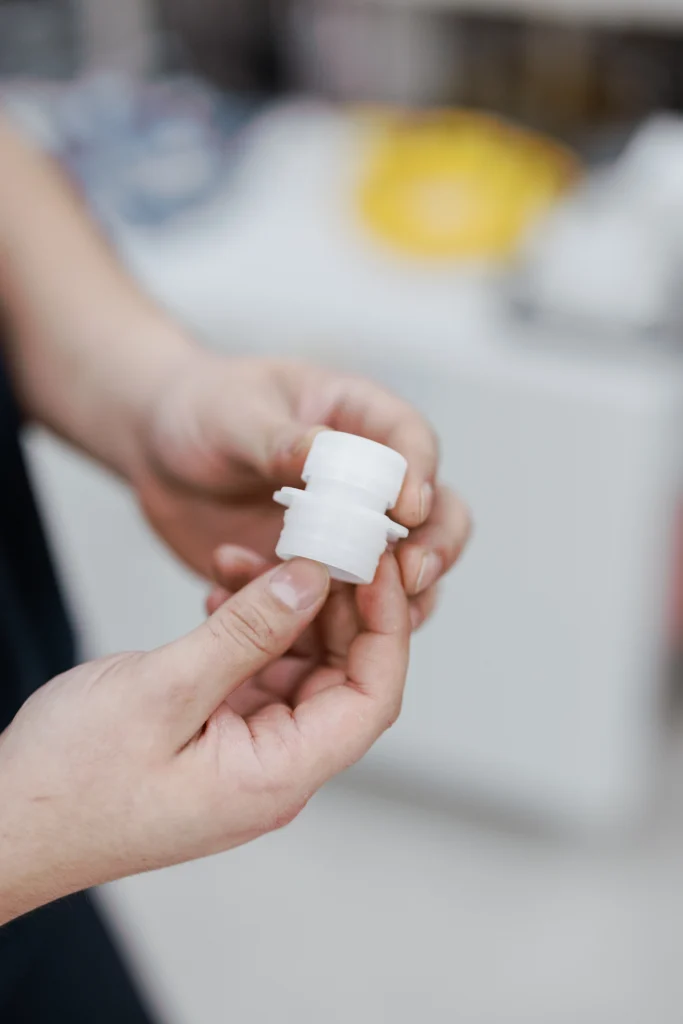
“Many of Hoffer’s sustainability initiatives began organically as part of its operational discipline and commitment to continuous improvement. For decades, programs such as resin reuse and regrind have been embedded in the company’s manufacturing processes to minimize waste and improve material efficiency. Over time, Hoffer has increased the segregation of materials on the production floor to prevent contamination, enabling more scrap to be reused or reprocessed and diverting additional waste from landfills,” said Mooberry.
More recently, the company has taken steps to formalize and expand those efforts. “With the creation of the environmental and sustainability specialist role in 2024,” said Mooberry, “Hoffer began advancing more structured initiatives with dedicated focus, including the development of a comprehensive carbon emissions tracking program and a formal Environmental Management System.”
Hoffer’s ongoing commitment to sustainability hit a milestone with its success in the latest environmental progress. Mooberry said, “These robust sustainability efforts culminated in Hoffer achieving ISO 14001:2015 certification in early 2026. This provides a certified framework for managing environmental performance and a stronger lens for evaluating priorities across the organization. Through the certification process, Hoffer further strengthened programs around carbon measurement as well as recycling and scrap management, bringing greater rigor, documentation and executive-level oversight to initiatives that had long been part of the company’s culture.”
As Hoffer looks to the future, Mooberry said, “We are evaluating options to secure a steady, economically viable supply of recycled material suitable for food-grade applications. Advances in battery technology, solar capabilities and other renewable energy developments are being closely monitored as the company evaluates new pathways to reduce emissions and move toward its long-term goal of carbon neutrality. In parallel, Hoffer is exploring creative energy solutions, including the potential use of landfill gas in future energy strategies.”
Action, Progress, Impact
One critical action Hoffer has implemented is in its emphasis on collection and analysis of environmental data. By doing so, the company’s sustainability initiatives can translate into measurable actions and drive improvements across departments. Hoffer tracks key operational metrics, including energy consumption, water use, recycling volumes and landfill diversion. Mooberry said, “Hoffer’s leadership team continues to reinvest in the company’s operations, adding multiple new electric machines each year. The newer technology improves energy efficiency, increases production throughput and provides enhanced real-time production data to help monitor energy use, reduce waste and optimize performance. That data feeds directly into Hoffer’s Quality Management System – enabling close monitoring, fast corrective action and continuous improvement across operations.”
In her role, Mooberry led the creation of a comprehensive carbon emissions calculator that incorporates data from electricity use, water consumption, material waste, upstream and downstream distribution and transportation. She said, “This system allows Hoffer to quantify emissions across its operations and supply chain and identify opportunities to set and achieve future emission reduction goals.”
Mooberry shared that these measurement practices build on longstanding operational tracking at the company, including monitoring the use of surface water, electrical consumption and scrap waste. With the recent implementation of its ISO 14001:2015 certification, those data streams now are integrated into a more formal framework that supports consistent reporting, ease of monitoring by organizational leaders, accountability and continuous improvement. Through these actions, Hoffer has seen progress in employee awareness and acceptance across the organization.
Hoffer’s vice president of Quality Excellence, Jim Stoffel, said, “Since the introduction of Mooberry’s role in late 2024, significant progress has been made in enhancing recycling efforts, reducing landfill contributions and improving overall operational efficiency. This progress is demonstrated by Hoffer’s in-depth evaluation and analysis of its waste streams, resulting in the additional diversion of nearly 10,000 lbs of recyclable material annually that would have previously been sent to the landfill. This improvement was driven by the implementation of more specific recycling bins for cardboard cores, ensuring they are properly recycled and, as a byproduct, generating thousands in annual cost savings. As a company, Hoffer diverts more than 360,000 lbs of material from landfills annually through its recycling and regrind programs.”
Beyond driving sustainability internally, Mooberry noted that customer engagement around sustainability also is increasing, as brands look for partners that can support recyclable packaging, responsible material use and timely, transparent environmental reporting. “In response, Hoffer is collaborating with nine customers on sustainability-related initiatives to identify opportunities that drive measurable improvements in environmental performance,” said Mooberry.
A Sustainable Vision
From vision to value, Hoffer Plastics integrates sustainability into both product development and corporate responsibility. The company believes that the environmental impact starts long before the product reaches the consumer. “It begins with how materials are selected, products are designed and parts are manufactured,” said Mooberry. “Injection molders play a critical role in bridging the gap between product performance and environmental responsibility, helping ensure materials remain in use as long as possible while maintaining the functionality customers expect. At Hoffer, we view sustainability as part of our responsibility as environmental stewards – for the industry, our customers, our employees and the community where we operate.”
Hoffer’s sustainable vision entails an approach guided by three key pillars:
- Material stewardship – Molded products can be designed to be recyclable, lightweight and compatible with reuse or recycling systems; in turn, extending materials and reducing environmental impact.
- Operational responsibility – Injection molders also influence sustainability through efficient manufacturing practices. Reducing the carbon footprint, minimizing waste and improving material recovery at the manufacturing level lay the foundation for supporting more sustainable supply chains.
- Collaboration – Circular solutions require close collaboration across the value chain. Working with customers and partners to innovate sustainable packaging and products that meet performance needs without compromising quality reinforces the idea that sustainability and performance can co-exist.
“For mid-sized manufacturers,” said Stoffel, “the key is integration. When sustainability is embedded into engineering, manufacturing operations, data systems and customer partnerships, companies can advance environmental goals while still delivering the performance, reliability and innovation customers expect.”
More information: www.hofferplastics.com