
By Adam Noble, vice president, Blue Ridge Industries
Introduction
Blue Ridge Industries (BRI) is a custom contract manufacturer specializing in injection molding, high-volume automation and engineering design – creating quality solutions since 1985. The company was founded by technical owners who excel at creating quality solutions and this technical, data-driven culture only has grown over the last 40-plus years. BRI has been exploring the use of artificial intelligence (AI) tools since 2022.
BRI’s AI “Policy”
BRI currently does not have a formal, lengthy AI policy. Technology and use cases are moving so fast that small- and medium-sized companies may be challenged to create and sustain a detailed AI use policy. Instead, BRI team members rely on three guiding principles:
- No Non-Public Data Use: Never enter any non-public BRI, customer, supplier or employee data into any free AI tool without a formal, signed data security contract. Does this principle set BRI back? Perhaps, but BRI’s commitment to all stakeholders’ data privacy comes first. In practice, this principle has not harmed the business, as team members have found many other uses for openly available AI tools that provide value and require no proprietary or personal inputs.
- Check Accuracy: Review all AI outputs for accuracy before use. If team members use AI-generated content, they must have a human subject-matter expert curate it before use. Blindly copying and pasting AI content can cause serious problems.
- Avoid Overuse: Reduce AI dependency and loss of authenticity. There is so much generic, near-useless AI content online right now that it can be extremely off-putting. Being real in an increasingly computer-generated world has immense value.
Strategy
There are so many AI tools available right now that selection can be overwhelming. Choosing the best AI tools is as important as, if not more important than, the applications one chooses to use them with. The landscape is changing rapidly, but right now, BRI’s experience shows that Perplexity is an AI tool that provides citations for sources and answers that one can research more in-depth later. Claude seems especially well-tuned to generating Python, VBA and other code. And of course, OpenAI’s ubiquitous ChatGPT is a well-rounded AI tool that excels in many areas, and team members find themselves using it often.
But there must be more to strategy than just writing good “prompts” for generative AI, right? (Although Google that topic because it is important!) The next layer, and what could separate early users from power users, is how to combine the best AI tools together. One may recall, as a kid, playing Street Fighter arcade games at the local pizza hangout. The simple big-button press provided a nice punch, but for the bosses, combos were needed! Once those combos were known, there was no going back. Is there a way to use one AI tool’s capabilities to feed another that can create something the first cannot? Could AI be used to write the automation for a program? These ideas are explored further in how BRI solved problems using unique AI tool combinations.
Execution
Beyond the three guiding policy principles, two primary directives come to mind when using AI tools to
solve problems.
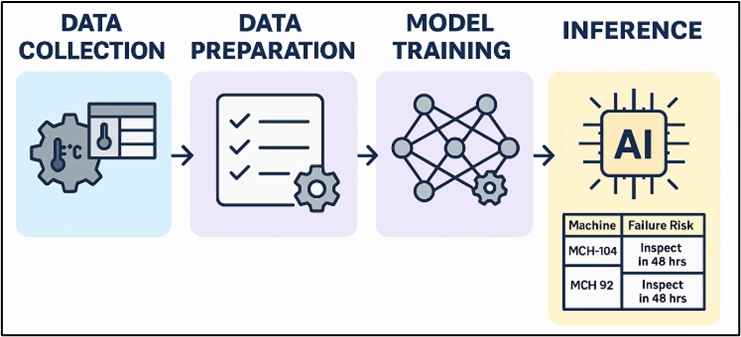
- Data Integrity: AI falls prey to the old Garbage In, Garbage Out (GIGO) adage. Perhaps even more so, AI will train its decision models on bad data, given the direction to do so. One must spend the time required in the distinctively unglamorous world of big data before one can reap the full rewards of AI. Inspect all data, know its provenance, error-check it – all before it goes into any AI tool. Not having good initial data is setting outputs up for errors and an operator up for mistakes and bad decisions.
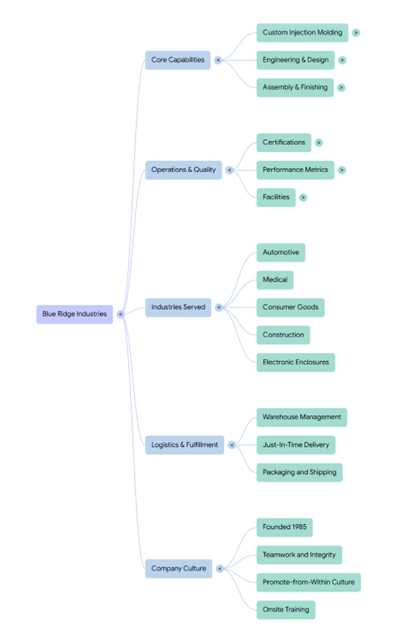
- Optimizing AI Tool Combinations: It is rare that one AI tool provides someone with everything they need, or at least as full a picture as needed. As discussed, there often is a need to string together multiple AI tools and automation solutions into a bespoke solution. BRI team members have done this. In one example, they used Perplexity’s citation capabilities to provide a list of authoritative links (company homepage, LinkedIn page, verified news sources) for Google’s NotebookLM AI tool to build an audio output describing a prospective customer’s history, current corporate focus, supplier strategy and more before going into the sales meeting. Best of all, this output can be listened to as a podcast on the employee’s commute. One less email to read! (Figure 1 and 2). In another example, BRI team members used Claude’s coding capabilities to write automation macros for CAD and Excel, using AI to build automation. That will hurt one’s brain if thought about for too long!
Impact
What impact is AI having on Blue Ridge Industries right now? In addition to the above, BRI team members are using AI to develop individualized learning plans for employee training. They are saving time tailoring AI-generated generic announcements to the business and unique circumstances. AI can be like having the assistant everyone always wants, providing first drafts for review. In other forums, such as 3DEXPERIENCEWORLD, the MAPP Benchmarking Conference and DELMIAWorks webinars, the BRI team members have explored the myriad of AI applications for predictive maintenance, proactive product quality control and upstream machine fault detection.
In the future, AI only will become more pervasive because the value is proven even early in its development curve. Glass half-full, it is a ticket in the United States for manufacturers to muddle through an extremely challenging population demographics and skilled workforce problem over the next 20-plus years. With that, areas where this potential could or already is taking shape includes the following applications:
- AI may be used to develop custom properties-based resins that enable designers to reduce material usage, cutting down on unnecessary emissions, simplify logistics and reducing plastics waste.
- AI video analytics may warn employees of hazards in real-time, reducing injuries and saving lives through existing CCTV systems already installed in many manufacturing facilities today.
- “Digital Twins” may become technically and financially accessible for small- and medium-sized businesses to run umpteen permutations and optimize a line that may only run a few hundred hours per year, but then multiply that success many times over.
- Scientific molding processes may be developed, controlled, modified and updated using AI tools.
- Contract manufacturers may be able to use AI app development tools like Rork and others to make training games for new employees to learn skillsets and “level up,” meeting a new workforce generation in a comfortable and familiar environment for the manufacturer to drive recruitment and retention.
- Natural language interfaces may finally render that fourth grade typing class obsolete (One can hope!). BRI’s scheduler at a recent Christmas potluck lunch was reading a late-night customer order off his phone as a reminder to schedule it in the morning. A team member jokingly asked if his reading was the actual scheduling in the ERP system. Unfortunately, not yet, but that capability is not far away!
In almost any task at work, there is usually always an AI tool or tool combo that can be brought to bear to simplify, speed or enhance the output. So, test the water. In the next task that needs to be completed, consider working with AI tools to see how the task could be automated, sped up or beneficially linked to other processes. In the event of a nice, clean dataset that needs analysis, see what AI can pull from it that the team did not – the possibilities are limitless. Welcome to 2026!
Adam Noble is a manufacturing executive with almost 20 years of leadership in engineering, program management and technical operations. As vice president at Blue Ridge Industries, he leads a team of 90-plus, drives strategic planning and aligns departments towards the BRI 2030 vision. His leadership has been key in creating quality solutions, launching new products and optimizing resources. Connect with him at www.linkedin.com/in/adam-2017/. (Bio AI-generated, human-curated!)
More information: www.blueridgeind.com