
More than 650 plastics manufacturing leaders gathered in Indianapolis for three days, ready to be empowered, eager to engage and driven to achieve excellence. The conference was filled with powerful keynote presentations, benchmarking, peer collaboration, meaningful conversations and proven business strategies, but one question remained: Who was willing to take what they learned over those three days back to their own operations and put it into action?
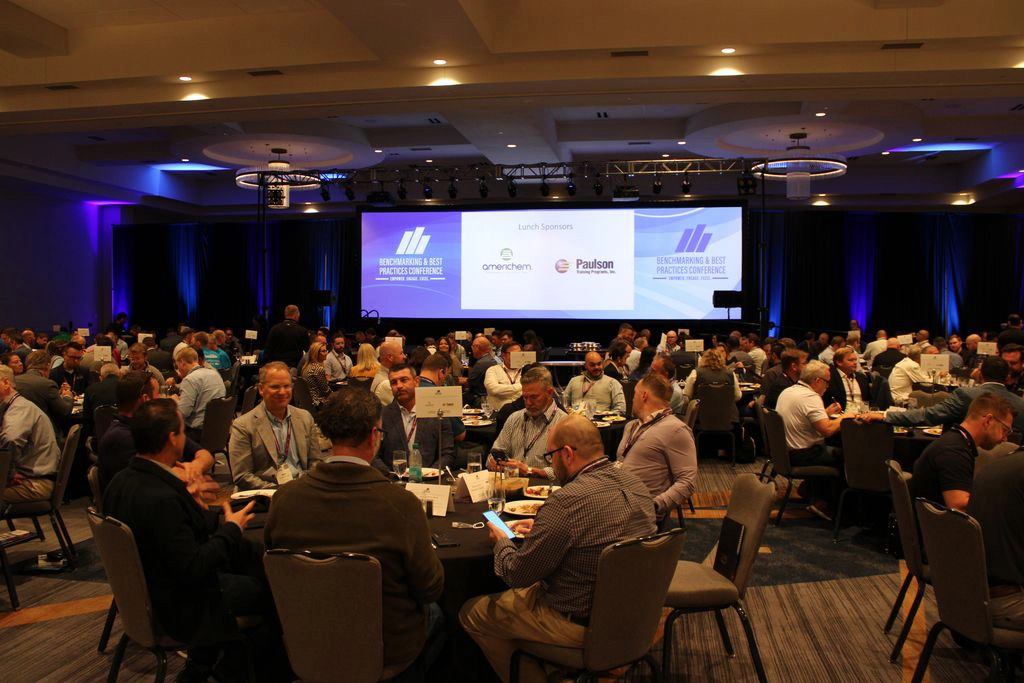
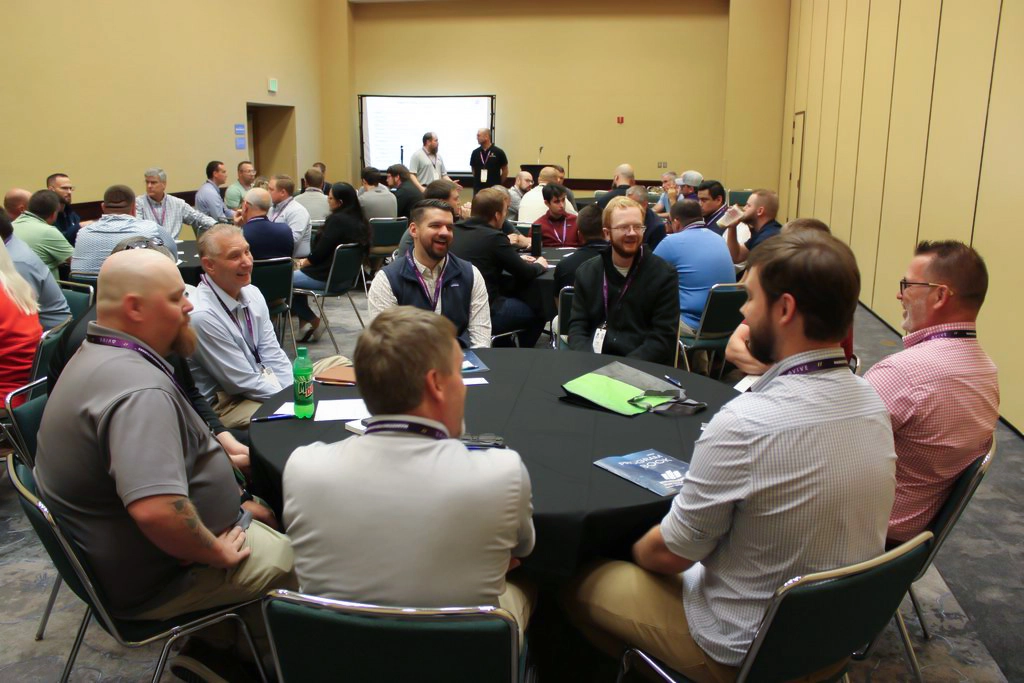
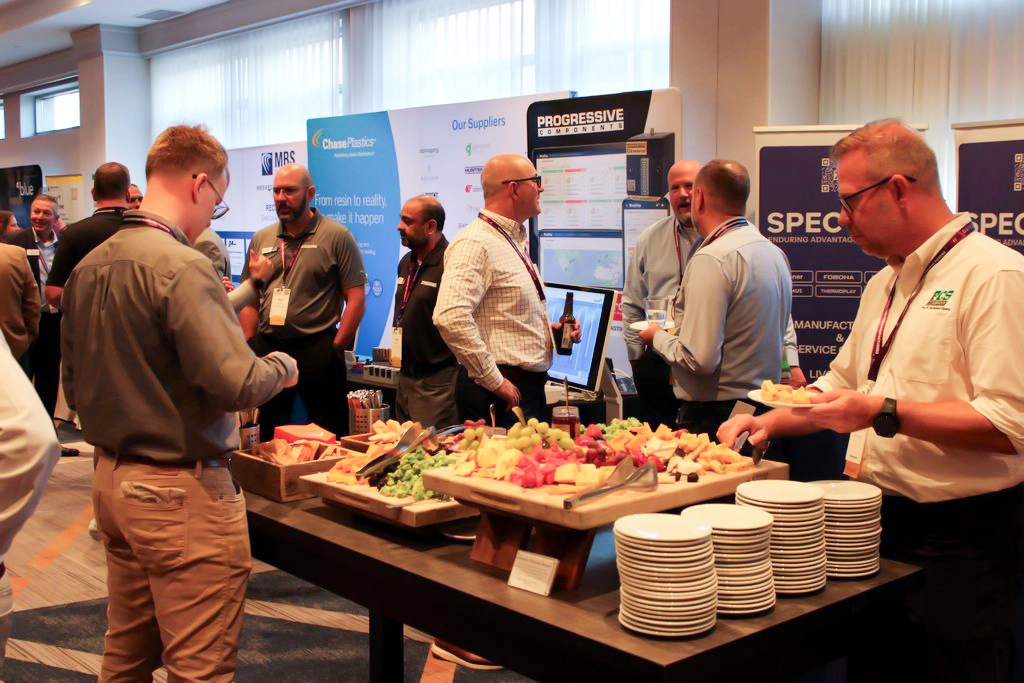
The answer was simple: Everyone. After all, the industry shares a common goal of making plastics manufacturing stronger, and turning ideas into action is a great way to get there.
Centered on this year’s theme, “Empowerment, Engagement and Excellence,” the Benchmarking conference team focused less on the “ifs” and more on the “cans,” offering real-world solutions that equipped attendees with actionable ideas to improve operations, strengthen their teams and position their companies for continued growth.
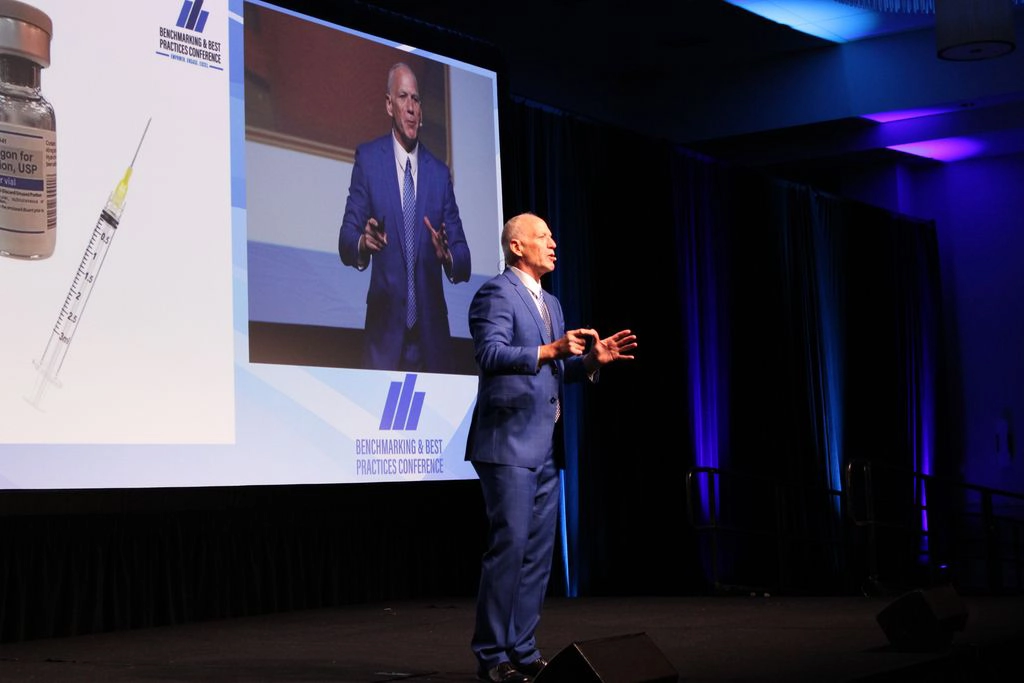
Troy Nix, MAPP executive director
Lead with Spoons
As a video played across the big screen showcasing MAPP member facilities, a voiceover set the tone, challenging attendees to rethink the constant need to move faster and instead encouraging them to find value in the “tactical pause.” It’s about stopping long enough to make better decisions. It was a strong start to Executive Director Troy Nix’s keynote, which was one of his most personal to date.
“For 24 years now, I’ve opened up this event with a truth about myself,” said Nix. “My transparency is designed to move the needle. This entire event is designed to make us all better – better leaders of people, better managers and organizational contributors.”
Speaking honestly about his battle with chronic insomnia, traumatic brain injury (TBI) and post-traumatic stress disorder (PTSD), Nix shared how spending decades operating in constant “fight or flight” mode finally had caught up with him. His message wasn’t about slowing business down; it was about recognizing that people can’t operate at full speed forever without consequences.Throughout the keynote, Nix gave attendees reminders:
- Reduce chronic stress before it takes over. “The body keeps score,” said Nix. “Sooner or later, that bill comes due.”
- Stop self-criticism. Nix said, “You made the best decision you had based on the data that you had. Move on. Drive on.”
- Make time to recharge. Leaders who prioritize time away from work are better suited to lead their teams effectively.
- Know individual capacity. Using the “Spoon Theory,” Nix told attendees to acknowledge that energy is limited and should be invested.
- Support employees before burnout. Notice team members who may be running out of “spoons,” so support and understanding matter as much as accountability.
“Learn to throttle,” said Nix. “I’ve only known one mode – full throttle. Now I’m learning to idle, and idle is not a bad thing. I want you all to leave this event throttled up in a responsible way… Leave here a better leader of people, a better manager and a better organizational contributor.”
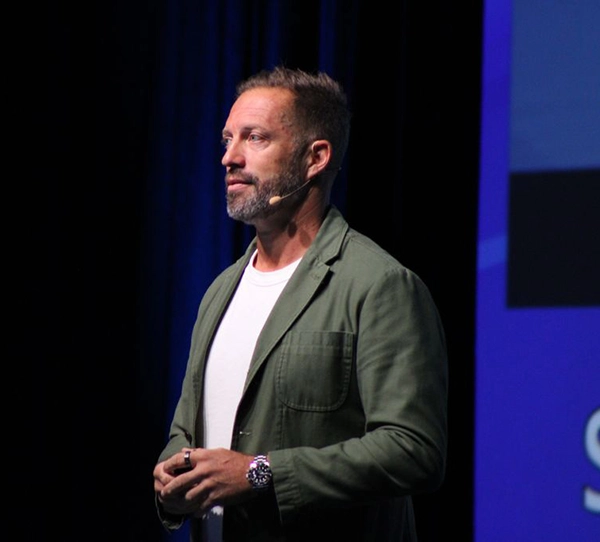
Sebastian Terry
Unlocking Limitless Possibility – Together
Some keynote speakers inspire, while others test their audiences. Sebastian Terry did both, driving attendees to stop and ask themselves a simple question: “What is on your bucket list?”
Terry opened with a story that changed the direction of his life forever with the sudden loss of a close friend at age 24. Sitting alone after receiving the phone call, he realized he wasn’t living with purpose. That moment became the foundation for creating a list of 100 meaningful goals. “The way we show up has a direct impact on other people,” said Terry. “What became very clear to me was that, yes, we’re strong alone, but we’re far better together.”
With humor and heartfelt stories, Terry reinforced the conference’s focus on leadership and community. He spoke about his journey to the Cannes Film Festival red carpet, saying success came not from controlling every outcome, but from taking the first big step. “We’re not in control of everything in our lives,” he said. “What we always are in control of are our actions. All based on that simple idea of permission. We just have to give ourselves permission, a split-second decision that we can all do. We don’t need to wait for someone else to give that to us. We can give it to ourselves. And when we do, it’s a blessing.”
His most powerful moments came when he spoke about the people who changed his own journey. Terry shared the story of Mark, a quadriplegic who asked only two words of him, and the only two words he could ever understand: “Push me.” Those words led the pair to complete a half marathon together, alongside dozens of strangers who joined their mission.
Rather than focusing on individual achievement, Terry pushed attendees to create stronger workplaces by investing in one another. He told everyone to begin conversations with three questions: “What’s important to you?,” “What are you finding hard?” and “Where do you need support?” By asking those questions, he said, “They communicate something every person wants to hear – I see you. I hear you. I’m with you.”
More information: www.sebterry.com
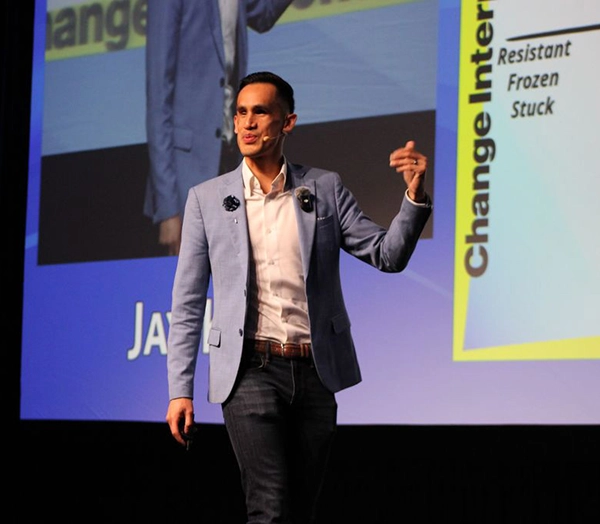
Jay Kiew, The Change Fluency™ Co.
How to Flourish in the Complexities of an Uncertain World
During his keynote, innovation strategist Jay Kiew told attendees to stop seeing disruption as something to overcome and instead embrace it as an opportunity to take the lead. He opened with a story about his four-year-old daughter, who turned a sick day at home into a unique experience by using AI to create her own version of her favorite movie. For Kiew, this showed how fast technology is changing the way people work and think. “If my daughter, four and a half years old, can leverage the latest in technology so seamlessly,” he said, “how might we do the same?”
That story led into a deeper one: Diagnosed with eye cancer before his first birthday, Kiew lost vision in one eye and spent much of his childhood adapting to constant change as his family relocated around the world. Those early experiences shaped his career as he studied why some people and organizations thrive against uncertainty while others struggle. His conclusion was, “We don’t have an innovation problem. We actually have a change problem.”
Kiew spoke on the challenges weighing down businesses today. He argued that the biggest opportunity lies not in replacing people, but in combining people skills and knowledge with technology. “We need more of the creativity and the critical thinking,” he said. “We need your guidance and oversight in building out the future of AI teammates.” He explained that it is not simply to work faster but to free employees to spend more time in their skilled trade, solving problems, collaborating with customers and creating company value.
Kiew closed by sharing the story of his late father, a blind radio personality in Singapore, who once interviewed Stevie Wonder. During the interview, Wonder pulled a harmonica from his jacket, played a few notes and shared a lesson: “There are many things that are impossible for us blind folks. We can’t drive. We can’t become surgeons. But I think you’re right. Everything else is possible because if you didn’t do what you do with the microphone, and I didn’t do what I do with my harmonica, we wouldn’t have blind DJs and blind musicians. And so, I believe that it’s up to us to leverage what’s right in front of us, whatever technology, whatever tools we have, to bring our best work to life.”
More information: www.changefluency.com
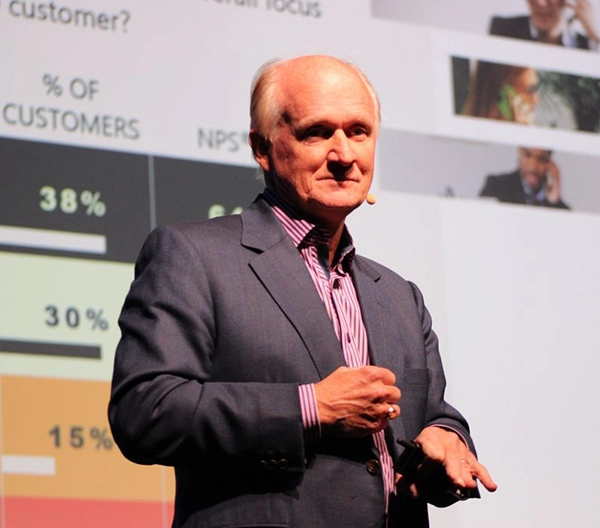
Tom Taber, t4associates
The Blind Spots Costing You Customers
The customer experience has become one of manufacturing’s advantages and a building block of business success. After years of customer research across hundreds of companies, Taber asked attendees to look beyond two things: quality and delivery. He called them “table stakes” – what customers expect. Instead, to gain that competitive advantage, companies are to focus on responsiveness, engagement and making it easy for customers to do business. “The secret sauce isn’t that different from company to company,” said Taber. “Get the fundamentals right, wow the customer and help them win.”
Taber highlighted five areas that separate top companies:
- Delivering on the basics
- Providing excellent customer service
- Simplifying business processes
- Quickly responding
- Being proactive and engaging with customers
More information: www.t4associates.com
Laurie Harbour and Mike Devereux, Wipfli
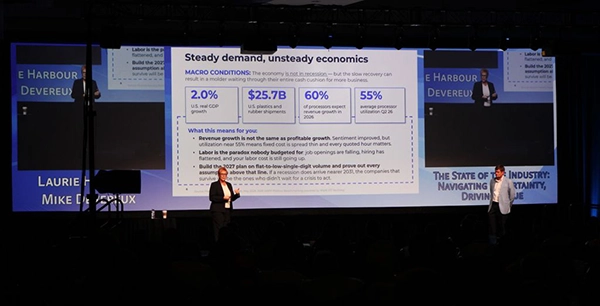
The State of the Industry
With tariffs, economic uncertainty and rapid advances in AI continuing to reshape manufacturing, Harbour and Devereux, partners at Wipfli, gave attendees a look at the state of the plastics industry. Rather than focusing on headlines, they highlighted the issues most affecting plastics processors today. While uncertainty remains, they emphasized that manufacturers can control how they respond. Their advice:
- Focus on what can be controlled, not Washington or market uncertainty.
- Protect margins by understanding costs and recosting parts.
- Invest in data and technology to improve decision-making and operational performance.
- Build a strong balance sheet.
More information: www.wipfli.com
Main Stage Master Class: The Hidden Cost of Being the Bottleneck
Tyson Daniels, owner of Polymer Contours in Allentown, Pennsylvania, prompted attendees to identify their biggest business bottleneck: themselves. Sharing from his own journey of growing a two-machine shop into a fully automated operation, Daniels explained that long-term growth comes from empowering employees, building a foundation and trusting team members to make decisions. He reminded attendees that true success is how well the business operates when they’re not there. “The snapshot of how your business runs when you’re not present is the sign of your leadership and your systems and procedures and how you’re empowering the people around you.”
More information: www.polymercontours.com
New Experiences Showcase Tooling and Innovation
The inaugural Made in America: Tooling Trade Fair brought plastics and rubber processors together with mold builders. Six AMBA member companies participated, including Byrne Tool + Design, D & M Tool, Legacy Precision Molds, Master Tool & Mold, MSI Mold Builders, and TK Mold & Engineering, showcasing their capabilities while building relationships with processors seeking domestic tooling partners.
Returning for its third year, the Innovation Hall remained a conference favorite, where attendees explored the latest automation technologies through live equipment demonstrations and interactive exhibits led by MAPP supplier partners.
The Benchmarking Conference Library: Insights Worth Revisiting
Couldn’t make it to the Benchmarking and Best Practices Conference? All main stage programming and breakout sessions were recorded and now are available for purchase through the Conference Library. Whether sharing valuable insights with a team, revisiting key takeaways or catching up on missed sessions, the library makes it easy to bring the conference experience back to the business. To explore the library and purchase access, visit www.mappinc.com.