
By Eric Smith, senior sales and automation specialist, QSI Automation
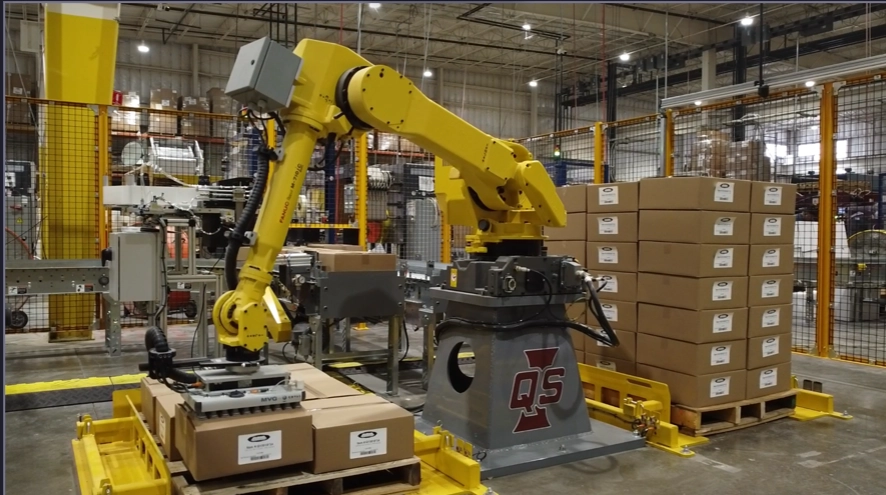
Labor shortages may have driven the first wave of automation investments in plastics manufacturing, but today’s competitive pressures demand much more than replacing manual tasks with robots. Rising labor costs, increasing quality expectations and pressure to maximize productivity are forcing manufacturers to rethink how their operations function as a whole.
The processors seeing the greatest gains aren’t necessarily adding more robots. They’re building connected manufacturing systems that integrate automation, data solutions like Ignition or Optix, and artificial intelligence (AI) to improve performance across the production floor. For manufacturers that already have begun their automation journeys, the next level isn’t necessarily more automation: It’s smarter automation.
Look Beyond the Press
One of the biggest misconceptions about automation is that it begins and ends at the injection molding machine. While robots have become commonplace for part
removal, the greatest opportunities often exist before and after the molding cycle. Every molded part follows a manufacturing journey:
- Material handling and drying
- Molding
- Part removal
- Inspection
- Assembly
- Packaging
- Palletizing
- Shipping
If any of those steps heavily depend on manual labor or inconsistent processes, it becomes the constraint limiting the entire production system. Many processors have invested in robots only to discover that operators still are manually inspecting parts, trimming gates, packaging products or moving material between operations. In these situations, the robot simply moves the bottleneck downstream. The next level of automation focuses on improving the entire manufacturing flow rather than optimizing a single isolated task.
Before Automating More, Stabilize the Process
Automation amplifies whatever process it supports. If the molding process is stable and repeatable, automation improves productivity, quality and consistency. If the process is unstable, automation won’t work at all or simply reproduces problems faster.
Before evaluating additional automation opportunities, manufacturers should ask several practical questions: Is the process repeatable? Can the task be standardized? Does it create quality variation or ergonomic concerns? Is it limiting machine utilization or throughput? Will automating this task eliminate a true production bottleneck?
The best automation projects typically begin with well-understood processes that already consistently perform. From there, automation removes repetitive work while making the operation more predictable and easier to manage.
Don’t Overlook Material Flow and Changeovers
While robots and downstream automation often receive the most attention, many injection molders discover significant efficiency gains in the supporting processes surrounding the press. Resin conveying systems, dryers, blenders and material-handling equipment play a critical role in maintaining process consistency, particularly for moisture-sensitive materials.
Likewise, mold changeovers continue to be a major source of lost production time in many facilities. Automated mold handling, quick-connect utility systems and standardized setup procedures can help reduce downtime between jobs while improving repeatability from startup to full production. In many cases, improving how materials and tooling move through the plant delivers greater benefits than automating another single operation.
Finding the Next Layer of Efficiency
Many manufacturers unintentionally underutilize the automation they already own.
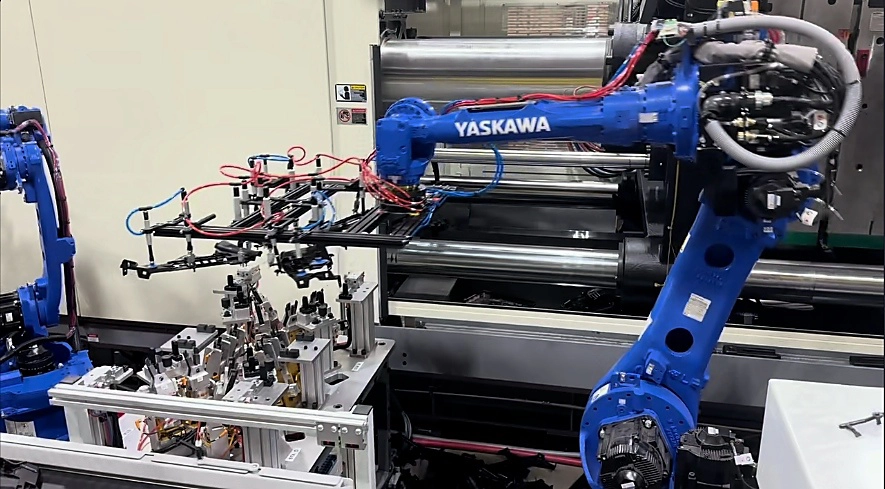
A robot purchased for part removal often has significant unused capacity. Once the part leaves the mold, that same robot also may be capable of performing additional value-added operations such as:
- Vision inspection
- Flash detection
- Insert verification
- Laser marking
- Part orientation
- Assembly
- Leak testing
- Packaging
- Palletizing
These secondary operations frequently deliver a greater return on investment than simply reducing cycle time.
Likewise, processors should evaluate areas that continue to rely on repetitive manual labor. Vision inspection, material handling, downstream assembly and packaging often are among the last processes to be automated even though they can consume significant labor while introducing variability.
From Automation to Intelligent Automation
Automation is entering a new phase. While traditional automation performs programmed tasks with exceptional repeatability, today’s systems increasingly are capable of making decisions based on real-time production data.
Artificial intelligence is helping manufacturers move beyond simple automation toward intelligent manufacturing. Rather than replacing employees, AI enhances the performance of equipment and people by providing greater visibility into production and identifying opportunities that might otherwise go unnoticed.
Examples already being implemented on molding floors include:
- Predictive maintenance that identifies wear in robots, grippers and conveyors before failures occur.
- Machine learning models that recognize subtle process drift before scrap rates increase.
- Intelligent scheduling tools that reduce downtime by optimizing production sequencing.
- AI-assisted troubleshooting that analyzes alarms and historical machine data to help maintenance personnel resolve issues faster.
These technologies allow manufacturers to shift from reacting to problems after they occur to preventing them before they impact production. The result is greater uptime, higher first-pass quality and improved overall equipment effectiveness (OEE).
Data: The Foundation of Every Automation Strategy
One characteristic separates highly automated facilities from those still early in their automation journeys: They measure everything.
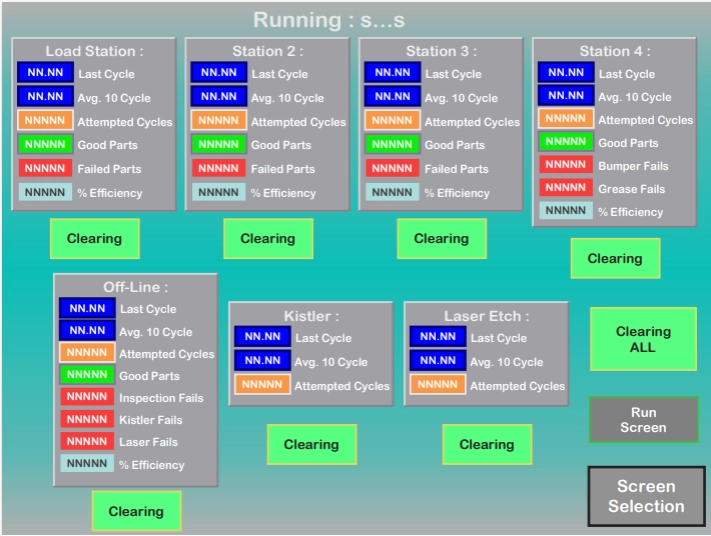
Production data is no longer simply collected for reporting – it drives continuous improvement. Modern automation systems can provide real-time visibility into:
- Cycle consistency
- Machine utilization
- Downtime causes
- Scrap trends
- Energy consumption
- Labor efficiency
- First-pass yield
Instead of waiting until the end of a shift to identify problems, manufacturers can respond immediately when production begins to drift outside acceptable limits.
As AI continues to evolve, this data becomes even more valuable. Intelligent systems rely on accurate production information to identify patterns, recommend improvements and optimize manufacturing performance. Without reliable data, even the most sophisticated automation system has limited ability to improve itself.
Choosing the Right Automation Strategy
Technology alone rarely determines the success of an automation project. Equally important is determining how that technology will be implemented.
Some manufacturers possess the internal engineering resources to design and integrate automation themselves. Others partner with equipment suppliers who provide standardized systems. Many choose to work with an experienced automation advisor who evaluates production challenges first and then recommends the most appropriate solution, regardless of the equipment ultimately selected.
Each approach has advantages depending on available expertise, production complexity and long-term objectives. The most successful projects typically begin with a thorough evaluation of the manufacturing process rather than a discussion about specific equipment.
Whether the solution is developed internally or with an external partner, manufacturers should seek an approach that prioritizes flexibility, scalability and long-term reliability – not one that simply looks for the lowest initial purchase price. Automation should be viewed as a long-term operational capability rather than a one-time capital expense.
Invest in People
No automation project is complete without investing in the people responsible for operating and supporting it. Even the most advanced automation system will underperform if operators, technicians and engineers lack the knowledge to utilize its capabilities fully.
Training should extend well beyond basic machine operation. Employees need to understand how the automation interacts with the molding process, how to recognize abnormal conditions, how to recover from faults quickly and how to identify opportunities for continuous improvement. As technologies such as machine vision, artificial intelligence and advanced controls become more common, ongoing education becomes even more important.
Manufacturers also should recognize that automation changes the nature of many production roles. Rather than eliminating jobs, it often shifts employees away from repetitive manual tasks toward higher-value responsibilities such as process optimization, quality assurance, preventive maintenance and system troubleshooting.
Companies that pair automation investments with workforce development consistently realize greater returns because they unlock the full potential of both their technology and their people.
The Future Belongs to Connected Manufacturing
Over the next several years, highly automated molding facilities will continue evolving from collections of independent machines into fully connected manufacturing systems.
Presses, robots, material handling equipment, vision systems, inspection technologies and production software will increasingly communicate with one another, sharing information in real time to optimize production with minimal operator intervention.
Employees will remain essential, but their roles will continue to shift toward process optimization, maintenance, quality improvement and continuous innovation rather than repetitive manual tasks.
The manufacturers gaining the greatest competitive advantage will not necessarily be those with the most robots. They will be the companies that understand how every process on the production floor works together, using automation, production data and artificial intelligence to make the entire operation smarter, more efficient
and more adaptable.
Automation is no longer measured by how many tasks have been automated. Its true value lies in creating a manufacturing system that continuously learns, improves and positions the business for long-term success.
Eric Smith is a senior sales and automation specialist at QSI Automation, where he works with the company’s customers to identify, develop and implement manufacturing automation solutions.
More information: www.qsiautomation.com